
Why Your Posture Is Costing You Energy (The Biomechanics Nobody Explains)
The Energy Leak You Missed
You’ve probably heard that good posture is important. You’ve nodded at the advice, sat up straighter for approximately three minutes, and then returned to the same collapsed position you were in before.
The reason posture advice doesn’t stick is that it’s usually delivered as a moral directive - “you should sit up straight” - rather than a mechanical explanation. And mechanical problems respond to mechanical understanding, not moral reminders.
Here’s the actual mechanism: poor posture isn’t just cosmetically displeasing. It creates a chronic, low-grade energy expenditure that compounds across an 8-hour workday, generating muscular fatigue, breathing restriction, and pain signals that your nervous system is constantly processing in the background.
The Forward Head Problem
For every inch your head moves forward of its neutral position over your shoulders, the effective weight on your cervical spine approximately doubles. A 12-pound head at neutral becomes 24 pounds of effective load at 1 inch forward, 36 pounds at 2 inches.
The average desk worker’s head is 2–3 inches forward of neutral throughout the workday.
Your posterior cervical muscles - the ones running up the back of your neck - are holding that load continuously for hours. By 3pm, they’re fatigued. That fatigue manifests as neck tension, headaches, the desire to stretch constantly, and a general sense of tiredness that you probably attribute to cognitive work or caffeine.
You’re not tired from thinking. You’re tired from holding your head up incorrectly.
The Chain Reaction
Forward head position doesn’t stay in the neck. It initiates a predictable kinetic chain:
- Head forward → cervical extensors overloaded
- Thoracic spine rounds (upper back hunches) to compensate
- Rib cage compresses → lung volume reduced by 20–30%
- Diaphragm restricted → breathing becomes shallower
- CO2 tolerance drops → anxiety response activated at lower thresholds
- Hip flexors shorten → lower back takes compensatory load
Poor posture isn’t one problem. It’s a cascade, and it ends at your lower back, your breathing, and your mood.
The Self-Audit (Do This Now)
Sit in your normal working position right now, before adjusting anything:
| Check | What to Look For |
|---|---|
| Head position | Is your ear over your shoulder, or forward? |
| Shoulder position | Are they rounded forward or stacked over hips? |
| Thoracic spine | Upper back flat or rounded? |
| Screen distance | Does reading require leaning forward? |
| Seat height | Are your hips slightly above your knees? |
| Feet | Flat on floor or crossed/tucked? |
Most people check all the wrong boxes on the first attempt. That’s normal. The audit is the intervention - awareness is the mechanism.
Fixes Ranked by Impact
Highest leverage:
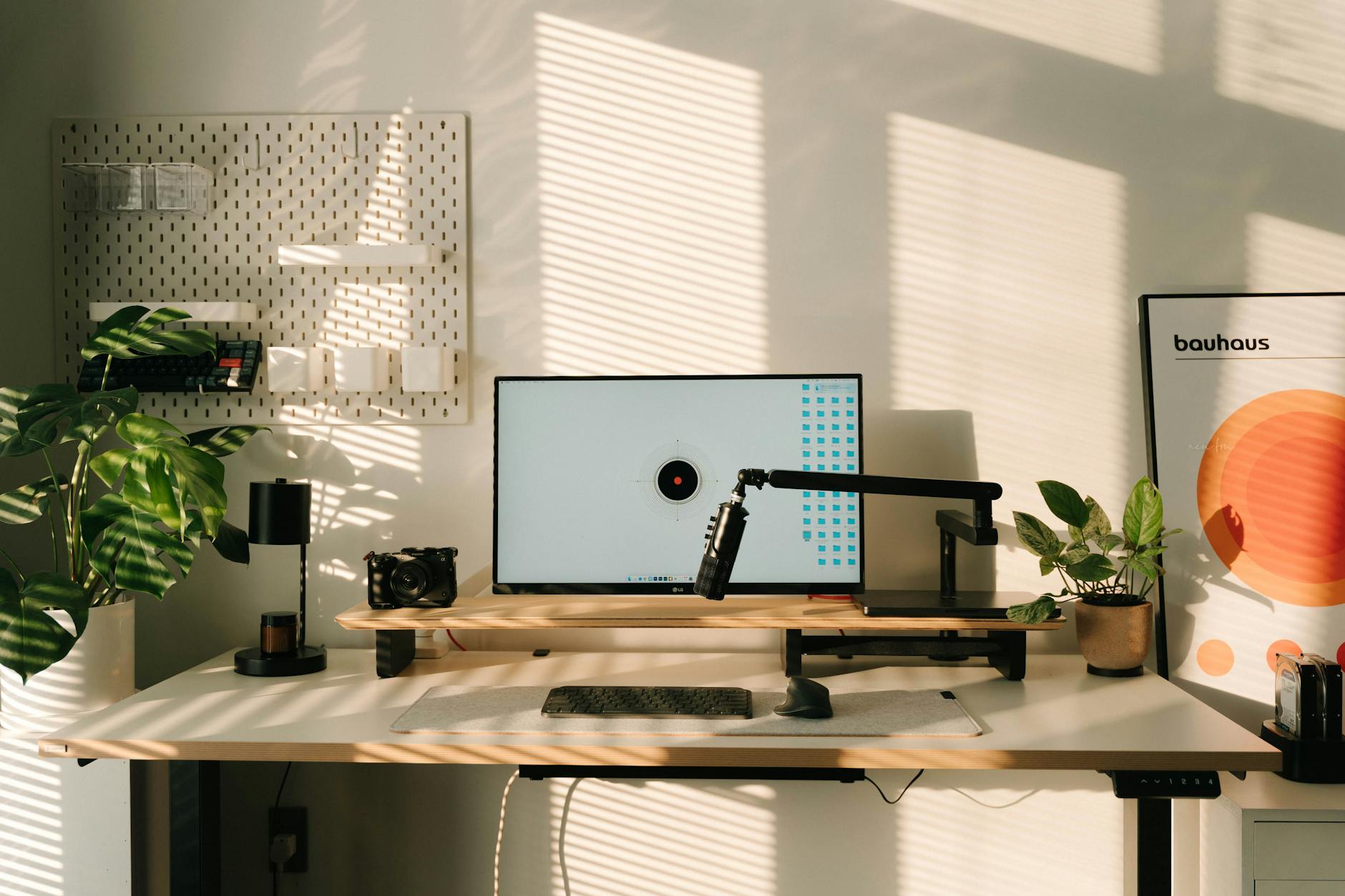
- Monitor at eye level - eliminates forward head from screen-gazing. A laptop riser + external keyboard costs ~$40 and fixes the most common cause.
- Chin tucks, 10 reps every hour - actively retrains cervical alignment. Sit upright, draw your chin straight back (not down). You’ll feel the posterior chain engage.
Medium leverage:
- Hip flexor stretch 2x/day - 90 seconds per side. Restores anterior pelvic tilt. Eliminates a major driver of lower back load.
- Seated posture every 30 min reminder - not to force posture, but to notice what you’ve drifted back to
Lower leverage but cumulative:
- Standing desk usage for 1–2 hours per day
- Thoracic foam rolling before work
The Energy Question
Workers who correct their workspace setup consistently report less afternoon fatigue, fewer headaches, and better end-of-day energy - without changing their workload, sleep, or nutrition. This isn’t placebo. It’s removing a 400-calorie-equivalent energy leak that’s been operating silently all day.
The fix costs almost nothing. The monitor riser is the only purchase that reliably matters. Everything else is free movement patterns done consistently.
That’s a high return on zero dollars.
)