
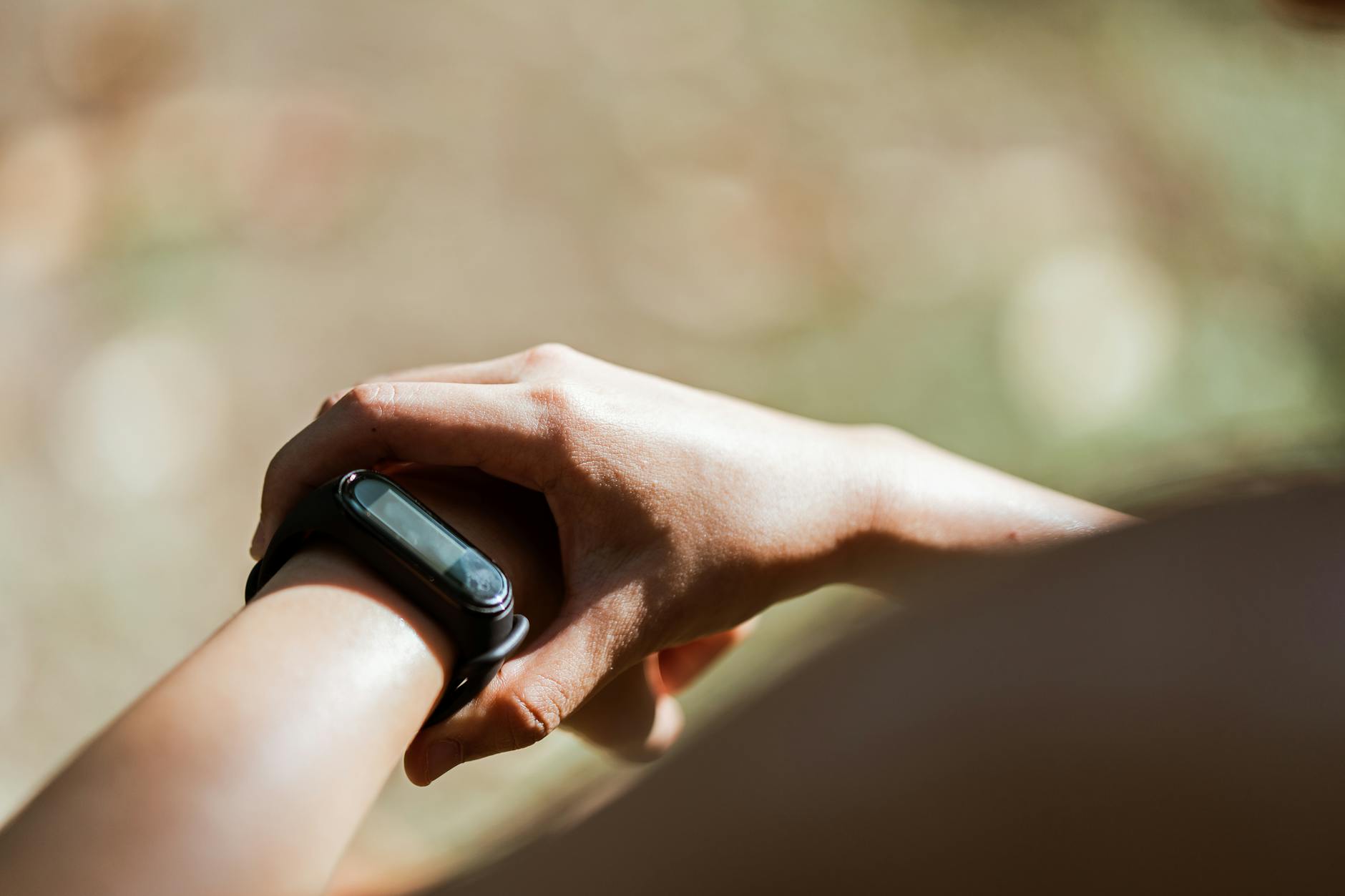
HRV: The Biometric Your Fitness Tracker Shows You but Never Explains
You’ve Seen the Number. Nobody Told You What It Means.
If you own an Oura Ring, a Whoop strap, an Apple Watch, or most modern Garmin devices, your app surfaces a daily HRV score. It changes every morning. Some days it’s up. Some days it’s tanked. The app tells you it’s “good” or “low” without explaining why it changed, what the number actually represents, or what you’re supposed to do about it.
This post is the explanation you were never given.
What HRV Actually Is
HRV stands for heart rate variability – the variation in time between consecutive heartbeats.
This sounds simple, but it’s worth pausing on. Your heart does not beat at perfectly regular intervals. Even at a resting rate of 60 beats per minute, each beat does not arrive exactly one second after the last. Some beats are separated by 950 milliseconds. Others by 1,050 milliseconds. That fluctuation is heart rate variability.
Higher variability is, counterintuitively, better. A heart that beats with robotic regularity is a heart whose nervous system has lost flexibility. A heart whose intervals fluctuate naturally is responding in real time to the body’s constantly shifting demands – a sign that the autonomic nervous system is working well.
The Cleveland Clinic describes HRV as “one of the best measures you can use to understand how your body is responding to stress, exercise, and recovery.”
The Autonomic Nervous System: The Engine Behind the Number
To understand HRV, you need a brief primer on what’s actually generating it.
Your heart rate is controlled by the autonomic nervous system (ANS), which operates in two modes:
- Sympathetic branch (“fight or flight”): accelerates the heart, increases alertness, mobilizes energy. Elevates when you’re stressed, exercising, or sleep-deprived.
- Parasympathetic branch (“rest and digest”): decelerates the heart, promotes recovery, restores resources. Dominant when you’re calm, well-slept, and recovered.
These two branches compete in real time for influence over the sinoatrial node – the heart’s natural pacemaker. When parasympathetic activity is high, it introduces more beat-to-beat variation. When sympathetic activity dominates, the rhythm tightens and variability drops.
HRV is therefore a read on the balance of this competition. According to the NIH, the parasympathetic nervous system communicates with the heart via the vagus nerve, and vagal tone – the health of this channel – is what HRV primarily reflects.
High HRV = robust vagal tone = healthy parasympathetic capacity = good recovery state. Low HRV = suppressed vagal tone = sympathetic dominance = stress load, fatigue, or illness.
Why HRV Predicts More Than You’d Expect
HRV is not just a recovery metric. The research connects it to a surprisingly wide range of outcomes.
Cardiovascular health
Low HRV is an independent predictor of cardiovascular events. A landmark study published in the American Journal of Cardiology found that post-infarction patients with low HRV had mortality rates five times higher than those with normal HRV. Subsequent research has confirmed HRV as a cardiovascular risk marker in the general population as well.
All-cause mortality
Cardiovascular Disease: A major meta-analysis published in Europace showed that low HRV is independently associated with an increased risk of incident cardiovascular disease and mortality, regardless of traditional risk factors.
Mental health and stress
Chronic psychological stress reliably suppresses HRV. A systematic review in the International Journal of Psychophysiology found that lower heart rate and higher HRV were consistent biomarkers in clinical depression, confirming the relationship between autonomic tone and mental health outcomes.
Athletic performance and overtraining
HRV has become a standard tool in elite sports for detecting overtraining before performance collapses. A systematic review and meta-analysis published in 2021 found that HRV-guided training produced greater improvements in cardiac-vagal modulation, aerobic fitness, and endurance performance compared to fixed-load periodization across multiple studies.
Sleep quality
HRV rises during deep sleep and peaks during REM. Chronically poor sleep suppresses overnight HRV recovery. A review in Sleep Medicine Reviews identifies HRV as a sensitive marker of sleep quality, with significant correlations between reduced HRV and insomnia, sleep apnea, and sleep fragmentation.
What Your Number Actually Means
[!NOTE] HRV is deeply individual. A reading of 45 ms may be excellent for a 55-year-old and low for a 28-year-old elite athlete. The most important comparison is you vs. your own baseline – not you vs. population averages.
That said, general ranges provide useful orientation.
| Age Group | Low HRV (concern) | Average HRV | Optimal HRV |
|---|---|---|---|
| 20-29 | Below 45 ms | 55-75 ms | Above 80 ms |
| 30-39 | Below 38 ms | 48-65 ms | Above 70 ms |
| 40-49 | Below 32 ms | 40-56 ms | Above 62 ms |
| 50-59 | Below 27 ms | 33-48 ms | Above 55 ms |
| 60+ | Below 22 ms | 28-42 ms | Above 48 ms |
Ranges represent approximate RMSSD values. Adapted from normative data reviewed in Shaffer & Ginsberg (2017), Frontiers in Public Health.
Most consumer devices (Oura, Whoop, Apple Watch) report HRV as RMSSD – the root mean square of successive differences between heartbeats – measured during sleep. This is now the standard for consumer wearables because it’s less sensitive to breathing rate than older frequency-domain metrics.
Common Misconceptions
| What people think | What’s actually true |
|---|---|
| “Higher is always better” | Higher is better relative to your own baseline; chasing someone else’s number is meaningless |
| “My HRV is the same every day if I don’t change anything” | HRV fluctuates daily even with identical routines – that variation is normal and informative |
| “One low reading means I’m sick” | Single readings are noisy; look at 7-14 day trends, not individual days |
| “Only athletes need to track HRV” | HRV is a systemic health marker relevant to anyone interested in stress, sleep, or longevity |
| “I can manually control my HRV” | You can influence it through consistent inputs; you cannot directly override it via willpower |
| “All wearables measure it the same way” | They don’t – measurement window, algorithm, and timing differ significantly across devices |
The Seven Inputs That Move Your HRV
Understanding what drives the number is more actionable than watching the number itself.
1. Alcohol Even one to two drinks the night before measurably suppresses HRV. Research published in Alcoholism: Clinical & Experimental Research found that alcohol has a dose-related effect on parasympathetic nerve activity during sleep, with suppression persisting through the following morning’s measurement window. This is one of the most reliable HRV signals, and most regular drinkers are surprised to see just how large the effect is.
2. Sleep quality and duration HRV recovers during sleep. Poor sleep – whether from insufficient duration or fragmentation – blunts overnight HRV recovery. This creates a feedback loop: low HRV predicts worse subjective sleep, and worse sleep produces lower HRV the next morning.
3. Exercise load Hard training acutely suppresses HRV for 12-48 hours post-workout. This is expected and healthy. The magnitude of suppression is proportional to training load and resolves with adequate recovery. Chronically low HRV without an obvious acute cause – when you’re not training hard – is the signal worth paying attention to.
4. Illness and infection The immune system’s activation shifts resources away from parasympathetic function. HRV drops one to three days before subjective symptoms appear in many cases – making it a surprisingly predictive early warning signal. Research published in Nature Digital Medicine using wearable sensor data and machine learning found that HRV decline was among the key signals enabling passive detection of COVID-19 before symptom onset.
5. Psychological stress Rumination, high workload, relationship conflict, and deadline pressure all suppress HRV through sustained sympathetic activation. This is the pathway most people intuitively understand but underestimate in magnitude.
6. Cold and heat exposure Brief cold exposure (cold showers, cold plunging) acutely elevates HRV via strong parasympathetic rebound following the cold stimulus. Regular cold-water exposure has been associated with higher baseline HRV in observational research, reflecting enhanced vagal tone over time.
7. Breathing The single fastest way to shift HRV in real time is through controlled breathing. Slow diaphragmatic breathing at approximately 5-6 breaths per minute (resonance frequency breathing) synchronizes heart rate oscillations with the respiratory cycle and produces rapid, measurable HRV increases. A review by Lehrer and Gevirtz in Frontiers in Psychology explains the autonomic mechanism behind HRV biofeedback and documents its clinical effectiveness across conditions including asthma, depression, and performance enhancement.
Your 7-Day HRV Baseline Protocol
Before you can act on your HRV, you need a reliable baseline. Here’s how to establish one:
Days 1-7: Measure only, change nothing
- Measure every morning immediately on waking, before getting up
- If your device measures automatically during sleep, review the overnight resting HRV (not the post-exercise reading)
- Note any major variables each morning: alcohol the night before, unusually poor sleep, illness, high-stress day prior
- Do not try to improve the number – just observe it
After 7 days:
Calculate your personal average. This is your baseline. All future readings are interpreted relative to this number, not against population tables.
- More than 20% above your baseline: Strong recovery. You can train hard or take on high-demand work.
- Within 10% of your baseline: Normal state. Proceed with planned activities.
- 10-20% below your baseline: Moderate suppression. Reduce training intensity, prioritize sleep, manage stressors where possible.
- More than 20% below your baseline: Significant suppression. Strongly consider rest, investigate the likely cause (illness, alcohol, severe sleep deficit, overtraining).
This rubric reflects guidance from Whoop’s HRV recovery framework and aligns with the HRV monitoring compliance research by Plews et al. in the International Journal of Sports Physiology and Performance.
How to Raise Your HRV Over Time
These are the inputs the research consistently supports.
Aerobic base training (Zone 2) Sustained low-intensity aerobic exercise is the most powerful long-term lever for HRV improvement. It builds cardiac output and vagal tone simultaneously. A systematic review and meta-analysis of randomized controlled trials found that exercise training significantly increased HRV in healthy adults, with consistent effects across exercise types.
Resonance frequency breathing 5-6 deliberate breaths per minute for 10-20 minutes daily. Apps like The Breathing App make this trivial to practice. The technique has one of the largest effect sizes of any HRV intervention in the published literature.
Sleep consistency Protecting sleep duration and maintaining a consistent sleep/wake schedule are both associated with higher resting HRV. One night of recovery does not fully compensate for accumulated sleep debt from an HRV standpoint.
Reducing chronic alcohol consumption The dose-response is steep. Even reducing from frequent moderate drinking to occasional light drinking produces measurable HRV improvements over weeks.
Meditation and mindfulness Research on mindfulness and HRV shows a consistent association: lower anxiety and stress – reliably produced by mindfulness practice – correspond to higher vagal tone over time. The mechanism runs through the same autonomic pathways that breathwork activates, and systematic reviews of HRV biofeedback-based mindfulness interventions confirm the physiological plausibility. Ten to fifteen minutes of daily slow breathing combined with present-moment awareness is a practical starting point.
A Note on Device Differences
Oura Ring, Whoop, Apple Watch, and Garmin all measure HRV – but not identically.
- Oura Ring: Measures during sleep (usually 3:00-5:00 AM window when parasympathetic activity is highest). Arguably the most reliable consumer measurement window.
- Whoop: Measures continuously during sleep, averages overnight reading. Comparable reliability to Oura.
- Apple Watch: Measures RMSSD during sleep with watchOS 9+. Also records during specific focus or breathing sessions. The accuracy compared to research-grade ECG is documented by Apple and generally strong for resting measurements.
- Garmin: Morning HRV status feature requires sleeping with the device. Reports a 5-minute average from the lowest-HRV 5-minute window overnight, which can skew lower than Oura/Whoop averages.
The key implication: do not compare your raw HRV number between different devices. Stick to one device and track your trend. The number is a relative signal, not an absolute measurement.
What to Do Right Now
If you own a wearable that tracks HRV and you have not been paying attention to it:
- Start recording it every morning for the next 14 days without making any changes
- Note correlations: identify which variables – alcohol, poor sleep, training – move it most for you specifically
- Establish your personal baseline
- Pick one input to optimize (if you drink, reduce alcohol first – it has the largest and most immediate effect for most people)
- Consider adding 10 minutes of slow breathing three to four times per week
If you do not own a wearable, the Kardia Mobile is an FDA-cleared ECG device that provides clinical-grade HRV readings for under $100 and works with a standard smartphone.
The Bigger Picture
Most fitness metrics are lagging indicators – they tell you how a workout went, how many steps you took, how fast you ran. HRV is one of the rare leading indicators. It tells you how your body is positioned before the next effort – how much reserve you have, how well your nervous system recovered, whether you’re trending toward illness before symptoms arrive.
It is also honest in a way few metrics are. You cannot will your HRV up. You cannot fool it with positive thinking. It responds to what you actually do – how you sleep, drink, move, breathe, and manage stress – and reports back without flattery.
Research published in Nature Digital Medicine increasingly points toward wearable HRV data as a clinically meaningful tool for early detection of physiological disruption – not replacing clinical diagnostics, but providing longitudinal context that no single clinic visit can capture.
That context, measured consistently over time, is the point.
Further Reading
- Cleveland Clinic – Heart Rate Variability (HRV)
- Whoop – Heart Rate Variability Explained
- PubMed – Shaffer & Ginsberg: Overview of HRV Metrics (2017)
- PubMed – Lehrer & Gevirtz: HRV Biofeedback (2014)
- PubMed – Vagal Tone and HRV Validation (2023)
- AJC – Decreased HRV and Increased Mortality After AMI (1987)
