
Why Mosquitoes Always Choose You (Every Attraction Factor, Ranked by Science)
It is a Saturday evening in July. You are at a backyard barbecue with eight friends, cold drink in hand, sun dropping behind the treeline. By the time you leave, you have counted 14 mosquito bites across your ankles, forearms, and the back of your neck. Your friend, who was sitting two feet away the entire time, has zero. Not one.
This is not bad luck. It is not karma. It is biology.
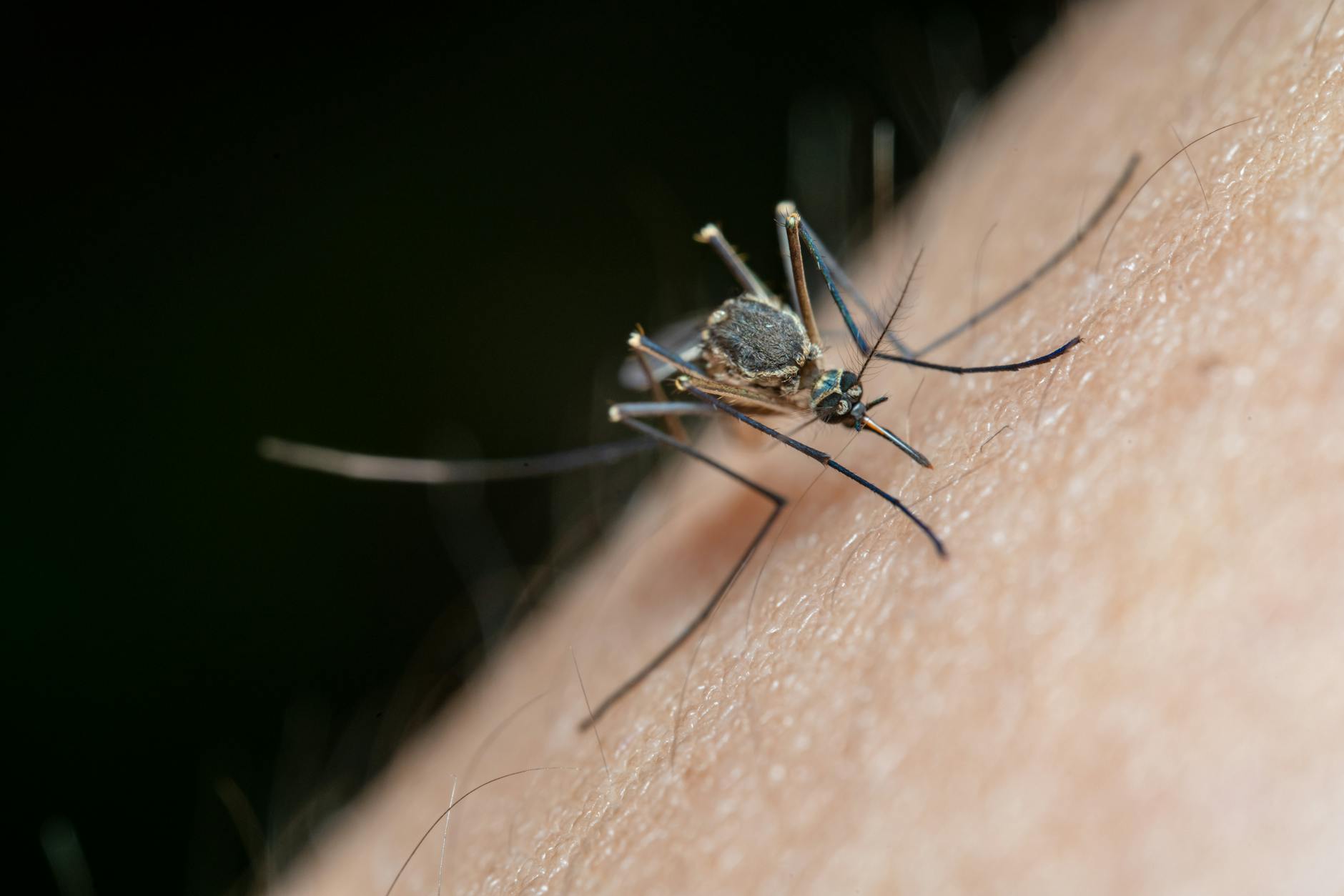
Researchers have spent decades cataloguing the signals that make one person a mosquito magnet while the person next to them goes untouched. The science is surprisingly deep, spanning entomology, microbiology, genetics, and metabolic chemistry. There are over 3,500 species of mosquitoes worldwide, and the females of most species (males do not bite) use a sophisticated, multi-step targeting system that combines long-range chemical sensing, mid-range thermal detection, and short-range visual cues.
What follows is every known attraction factor, organized into tiers by strength of scientific evidence. Think of it as a tier list for how badly mosquitoes want to find you. The factors at the top are virtually impossible to change. The ones at the bottom barely matter. And knowing the difference can help you fight smarter, not harder.
S-Tier: The Factors Mosquitoes Cannot Ignore
These are the primary signals. They are backed by decades of replicated research, and they operate at long range. If you rank high on all three, you are essentially broadcasting a homing beacon.
Carbon dioxide output. Mosquitoes detect CO2 from over 50 meters away using specialized sensory organs on their maxillary palps. Your CO2 plume is the first thing that draws them in from a distance, long before they can see you or smell your skin. Larger people exhale more CO2 per breath. So do people with higher breathing rates, whether from exertion, pregnancy, or simply being bigger. This is the single most important factor and the reason children tend to get fewer bites than adults.
Skin microbiome and body odor. Your skin hosts a complex ecosystem of bacteria that metabolize sweat into roughly 350 volatile chemical compounds. The specific mix of those compounds varies dramatically from person to person, and mosquitoes have strong preferences. Research published in PLOS ONE found that individuals with high densities of Staphylococcus bacteria on their skin were significantly more attractive to Anopheles gambiae mosquitoes, while those with more diverse microbial communities were less attractive. Your body odor is not one signal. It is hundreds of signals, and the blend matters enormously.
Blood type. In a controlled study published in the Journal of Medical Entomology, researchers found that Type O individuals attracted significantly more Aedes albopictus mosquitoes than Type A or Type B carriers. Type O subjects received roughly twice the landings of Type A subjects. The mechanism is thought to involve chemical secretions on the skin that signal blood type to foraging mosquitoes, particularly in people who are “secretors” (about 80% of the population).
A-Tier: Strong Biological Signals
These factors are well-supported by research and create meaningful differences in bite rates. They operate at closer range than CO2 but are still powerful attractants.
Body heat and sweat composition. Mosquitoes use thermal sensing to zero in on targets at close range. Higher metabolic rates produce warmer skin, larger thermal plumes, and more sweat. That sweat contains ammonia, uric acid, and lactic acid, all of which are known mosquito attractants. People who naturally run hot or sweat heavily are broadcasting a stronger short-range signal. This is separate from the microbiome effect: it is the raw chemistry of your perspiration before bacteria even get involved.
Pregnancy. Pregnant women receive approximately twice as many mosquito bites as non-pregnant women. The reasons stack up: pregnant women exhale roughly 21% more CO2, have elevated body temperatures, and undergo hormonal changes that alter skin chemistry. This is not folklore. It has been documented in controlled studies and is one reason public health officials in malaria-endemic regions prioritize bed nets for pregnant women.
Post-exercise lactic acid. Exercise creates a temporary triple signal: elevated lactic acid on the skin surface, increased ammonia in sweat, and a rise in body temperature and breathing rate. Studies on L-lactic acid as a mosquito attractant have confirmed that it is a potent short-range signal, and it peaks on the skin in the 30 to 60 minutes after vigorous activity. If you go for a run and then sit outside without showering, you are essentially ringing the dinner bell.
B-Tier: Real but Situational
These factors have genuine research support, but their effect sizes are smaller or depend on specific conditions.
Alcohol consumption. A controlled study found that drinking a single 350ml beer significantly increased mosquito landing rates on subjects compared to pre-drinking baselines. The researchers tested whether the effect was driven by ethanol in sweat or by increased skin temperature (vasodilation), but neither variable fully explained the increase. The mechanism remains unclear, but the effect is real and reproducible. One beer is enough to make you measurably more attractive to mosquitoes. The irony, of course, is that the outdoor situations where you are most likely to have a drink are exactly the ones where mosquitoes are hunting.
Dark clothing. Mosquitoes rely on visual cues at ranges under 10 meters, and they are drawn to dark colors. Research on mosquito host-seeking behavior has shown that dark fabrics (black, navy, red) attract more landings than light ones (white, khaki, pale yellow). Dark colors retain more heat (enhancing the thermal signal) and create higher visual contrast against most backgrounds. This is a real factor, but it only matters once a mosquito is already in your vicinity. If you are choosing between a black t-shirt and a white one for your evening patio session, the white one is the objectively better choice.
Genetics beyond blood type. Twin studies have provided some of the most compelling evidence that mosquito attractiveness is heritable. Research published in PLOS ONE found that identical twins were significantly more similar in their attractiveness to mosquitoes than fraternal twins, suggesting roughly 67% heritability. The genetic factors at play likely include genes that shape skin microbiome composition, sweat chemistry, and immune-related compounds on the skin surface. You did not choose to be a mosquito magnet. Your parents made that choice for you.
C-Tier: Emerging Science, Incomplete Picture
These factors appear in the literature but lack robust replication or have produced contradictory results.
Diet-derived skin compounds. The idea that eating garlic, onions, or thiamine-rich foods repels mosquitoes (or that certain foods attract them) has circulated for decades. Some studies have detected changes in volatile skin compounds after dietary modifications, but controlled trials have not consistently shown that dietary changes meaningfully alter bite rates in field conditions. The signal, if it exists, is likely too small to matter compared to the S-tier and A-tier factors.
Skin cholesterol and steroid levels. Some early research found that people with higher concentrations of cholesterol and steroids on their skin surface attracted more mosquitoes. However, this correlational finding has not been well replicated, and it is unclear whether the cholesterol itself is the attractant or whether it is a marker for other skin chemistry variables that drive the effect. The data here is interesting but too thin to rank any higher.
D-Tier: Mostly Myth
These are factors that live in popular belief but do not hold up under controlled scientific testing.
Banana consumption. The claim that eating bananas attracts mosquitoes is one of the most persistent pieces of mosquito folklore. There is no controlled evidence supporting it. The idea likely originated from the fact that bananas contain octenol and other compounds found in some insect attractants, but the metabolic pathway from eating a banana to emitting a mosquito-attracting compound through your skin has never been demonstrated. Until someone runs a proper controlled trial, this one stays in the myth column.
Vitamin B supplements as a repellent. The belief that taking vitamin B1 (thiamine) supplements will repel mosquitoes has been tested in multiple randomized controlled trials and consistently debunked. Neither oral nor transdermal thiamine has been shown to reduce mosquito attraction in any rigorous study. If someone tells you to take B vitamins before your camping trip, they mean well but the science does not support them.
Ultrasonic repellent devices. Electronic devices that claim to repel mosquitoes by emitting high-frequency sounds have been thoroughly tested and consistently fail. A Cochrane systematic review evaluated multiple trials of ultrasonic mosquito repellent devices and found no evidence that they prevent mosquito bites. These devices continue to sell well despite the evidence, which tells you more about marketing than about entomology.
How to Lower Your Tier
You cannot change your blood type, your genetics, or your microbiome overnight. But you can reduce the signals that put you at the top of the mosquito buffet line.
Time your outdoor activities. Most mosquito species are most active at dawn and dusk. Shifting your outdoor time to midday significantly reduces exposure.
Use fans. Mosquitoes are weak fliers. A simple box fan or oscillating fan disrupts your CO2 plume and makes it harder for mosquitoes to land. This is one of the most underrated and effective strategies.
Wear light-colored, loose-fitting clothing. Light colors reduce visual attraction, and loose fabric makes it harder for mosquitoes to bite through to skin. Tight dark leggings are essentially a mosquito welcome mat.
Use EPA-registered repellents. The EPA’s list of registered skin-applied insect repellents includes four active ingredients with strong evidence: DEET, picaridin, IR3535, and oil of lemon eucalyptus (OLE/PMD). These work. Apply them to exposed skin and follow the label directions.
Shower after exercise. Rinsing off sweat removes lactic acid, ammonia, and other attractants from your skin surface. If you cannot shower, even wiping down with a damp cloth helps.
What does not work: citronella candles (minimal effect beyond arm’s reach), repellent wristbands (protect only the wrist), and phone apps that claim to emit repellent frequencies (see the D-Tier above).
The Bottom Line
Mosquito attraction is not random, and it is not a single variable. It is a layered system of chemical, thermal, visual, and genetic signals that stack on top of each other. Some of those signals (CO2 output, microbiome, blood type) are largely outside your control. Others (clothing color, timing, repellent choice, post-exercise hygiene) are entirely within it.
If you have ever asked yourself why mosquitoes bite you and not the person sitting next to you, now you have the answer. It was never about bad luck. It was about your CO2 plume, your skin bacteria, your blood chemistry, and maybe that dark shirt you were wearing. You cannot rewrite your genetics, but you can shower after your run, point a fan at your chair, and put on some DEET. That alone might be enough to drop you a tier or two.
)